Modern Spine Innovation: How Dr. Kamal Woods’ Bio Reflects the Future of Patient-Centered Care
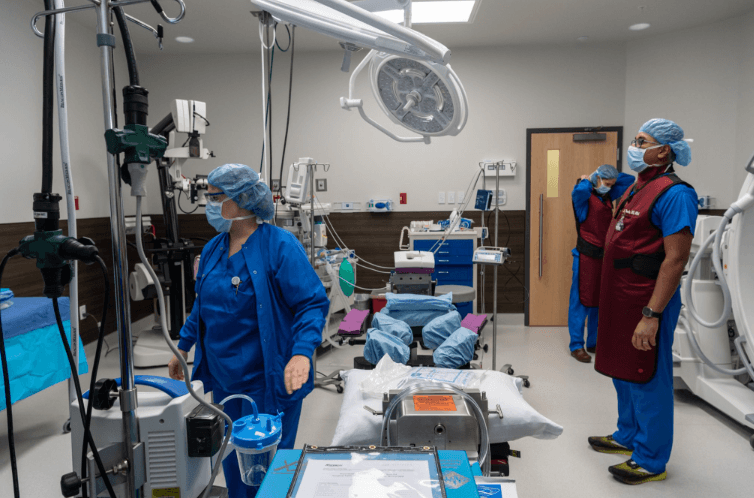
Modern spine care is shaped by more than advanced tools. It depends on training, judgment, communication, leadership, and the ability to connect technology with real patient goals. That is why the professional biography of Kamal Woods, MD, MBA, FAANS, matters. Vertrae® describes Dr. Woods as a board-certified neurosurgeon, founder of Vertrae® and Vertrae® Surgery Center, and a spine specialist with advanced fellowship training at Cedars-Sinai Medical Center, neurosurgery residency at Loma Linda University Medical Center, and an MBA from Johns Hopkins University.
His profile reflects a modern direction in healthcare: combining surgical expertise with thoughtful systems, clear explanations, and treatment planning that focuses on the person, not just the scan.
Advanced Training Meets Modern Spine Technology
Dr. Woods’ combined orthopedic and neurosurgery spine fellowship at Cedars-Sinai Medical Center is an important part of his bio. Spine care often involves both structure and nerve function. Orthopedic training helps evaluate bones, alignment, movement, and stability. Neurosurgical training helps evaluate the spinal cord, nerve roots, and neurological symptoms.
That dual perspective supports modern treatment planning because spine problems can be tricky. A disc issue, spinal stenosis, or degenerative change may affect movement, pain, strength, or sensation. The spine is not exactly a simple neighborhood; it is more like a busy intersection with nerves, bones, joints, and discs all trying to share the road.
Board Certification and Clinical Judgment Matter
Vertrae® identifies Dr. Woods as board-certified by the American Board of Neurological Surgery. Board certification helps patients understand that a physician has completed recognized specialty training and met professional standards in neurosurgery.
Innovation in medicine should never replace judgment. Robotic-assisted techniques, minimally invasive options, motion-preserving approaches, physical therapy, injections, and surgical planning all need careful evaluation. The right option depends on the patient’s diagnosis, symptoms, imaging, health history, and goals.
For patients researching the physician profile and spine care model, Vertrae®: Kamal Woods, MD, MBA, FAANS, provides a helpful starting point.
Leadership Education Supports a Better Care Experience
Dr. Woods’ MBA from Johns Hopkins University adds another modern layer to his biography. Healthcare is not only about individual procedures. It also involves systems that help patients move from evaluation to diagnosis, treatment planning, recovery, and follow-up.
A strong spine care experience should feel organized. Patients need to know what is happening, why it matters, and what comes next. Business training can support leadership, process improvement, communication, and the design of care pathways that are easier to understand.
That matters because patients dealing with spine pain are already carrying enough stress. The care process should not feel like assembling complicated furniture with missing instructions.
See also: Building Trust Through Transparency: Advantage Home Inspection NC
Patient-Centered Innovation Starts With Listening
Vertrae® public materials describe Dr. Woods as focused on listening to patients, explaining complex procedures clearly, and treating people as partners in their care. That is where technology and humanity meet.
A scan may show anatomy, but the patient explains how symptoms affect work, sleep, movement, family life, and confidence. Good spine care connects both. Innovation is valuable when it helps patients understand options and move toward goals safely.
For more information about the practice and spine-focused services, visit Vertrae.
A Modern Bio With Real Patient Meaning
Dr. Woods’ biography highlights advanced spine training, neurosurgical expertise, board certification, business leadership, and a patient-first philosophy. Those details are not just credentials on a page. They help explain how Vertrae® presents a care model built around modern technology, thoughtful evaluation, and clear communication.
For patients facing back pain, neck pain, nerve symptoms, or degenerative spine conditions, understanding the physician behind the practice can make the first step feel less intimidating. A strong bio gives patients context, confidence, and better questions to bring into the care conversation.